Bullion Tracker flagship guide
The Complete Gold Sovereign Guide
Explore the full modern Sovereign story from 1817 to today: five denominations, nine monarchs, historic branch mints, proof and bullion issues, famous reverses and more than two centuries of British gold coinage.
1817Modern series begins
22ctTraditional gold alloy
5Principal denominations
Latest database issue
 2026 Gold Five-Sovereign Piece - Yellow Gold Proof
The essential answer
Britain’s enduring gold coin
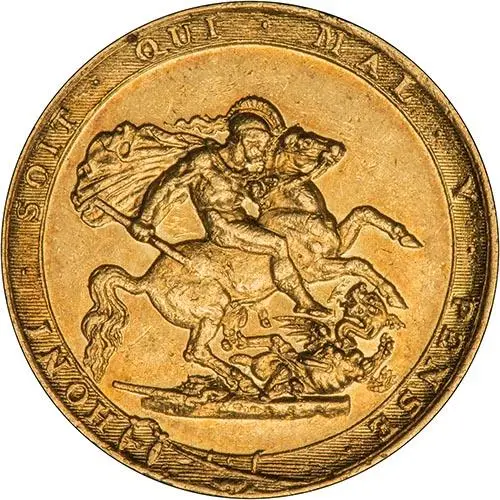
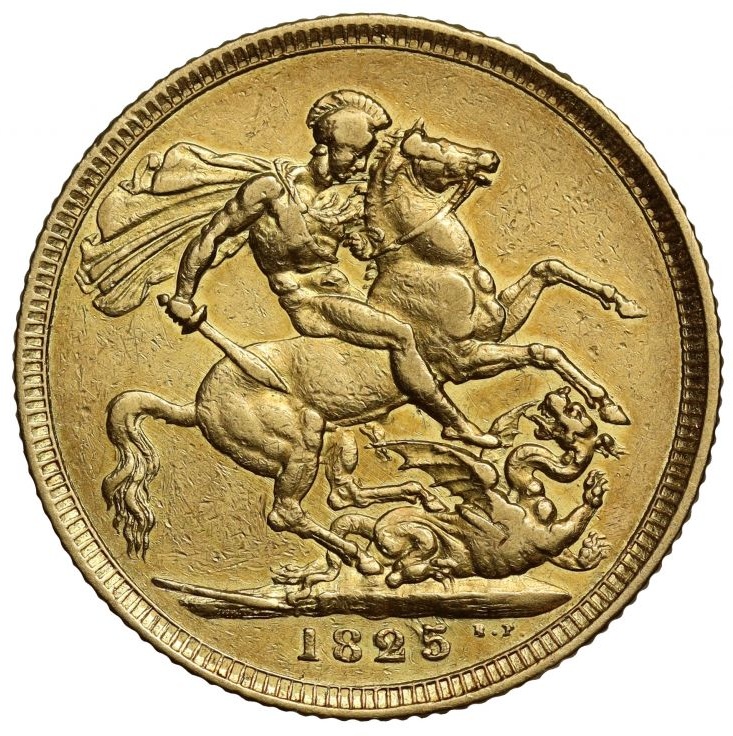
The modern Gold Sovereign was introduced in 1817 as a twenty-shilling gold coin. Its standard full-size specification—about 7.98g of 22-carat gold—has become internationally recognised, while Pistrucci’s St George and the Dragon remains one of the most famous designs in world coinage.
Today the Sovereign works as both an investment coin and a vast collecting subject. A buyer can choose a common bullion example, build a monarch or portrait set, explore historic branch mints, collect proof issues, or follow the complete five-denomination family.
- Modern introduction
- 1817
- Full weight
- 7.98g
- Fine gold
- 7.32g
- Purity
- 916.7 / 22ct
- Diameter
- 22.05mm
- Classic reverse
- St George & the Dragon
863Sovereign-family records
180Years represented
2026Latest listed year
One family, five weights
The complete Sovereign family
The word “Sovereign” often means the standard full coin, but the official family contains five principal denominations. They share the traditional 22-carat alloy and scale from the tiny Quarter Sovereign to the imposing Five-Sovereign Piece.
A global British coin
Branch mints and mint marks
Historic Sovereigns were struck close to major goldfields and throughout the British Empire. Small mint marks turn otherwise similar coins into distinct catalogue entries and are essential to advanced collecting.
LLondon
Usually no mint mark. The original and continuing home of Royal Mint Sovereign production.
SSydney
Opened Sovereign production in 1855 and initially used a distinctive local design.
MMelbourne
A major Australian producer from the Victorian period through George V.
PPerth
Produced Sovereigns from 1899 and remains one of Australia’s best-known mints.
COttawa
Canadian Sovereigns carry the C mint mark and were struck during the Edward VII and George V eras.
IBombay
The 1918 India issue is identified by an I mint mark and forms a focused one-year branch-mint type.
SAPretoria
South African Sovereigns close the historic branch-mint circulation story in the 1920s and early 1930s.
Where to lookOn classic St George Sovereigns, the branch-mint letter is normally found on the reverse in the ground above the date. Position and visibility vary by design.
Choose the right finish
Bullion vs proof Sovereigns
BullionMade primarily for investment
- Lower production cost and usually lower premium
- Standard struck finish
- Often sold loose or in simple capsules
- Value tracks gold content more closely
- Best suited to stackers and first-time buyers
ProofMade primarily for collectors
- Specially prepared dies and polished fields
- Lower mintages are common
- Usually supplied in presentation packaging
- Price reflects finish, rarity and completeness
- Best suited to condition-focused collectors
A proof Sovereign is not automatically a better investment, and a bullion Sovereign is not a lesser coin. They serve different buyers. Always compare the premium with your reason for purchasing.
Powered by the Bullion Tracker database
Explore representative Sovereigns
The database now separates historic circulation, bullion, proof and special issues across the complete five-denomination family.
For UK buyers
How to choose a Gold Sovereign
1Decide why you are buying
Choose bullion for lower-premium gold exposure or proof and historic coins for collecting.
2Confirm the denomination
A Quarter, Half and Full Sovereign can look similar in photographs but contain very different amounts of gold.
3Compare the premium
Measure the price above melt value rather than comparing headline prices alone.
4Check date, mint and condition
These factors can matter more than age when buying collectable examples.
5Record and protect the coin
Keep purchase details, packaging and provenance, then store the coin appropriately.
UK tax noteQualifying investment gold is generally VAT exempt, and UK legal-tender Sovereigns are generally treated as exempt from Capital Gains Tax for UK residents. Tax treatment can change and this guide is not personal tax advice.
An unusual catalogue story
Why some later-struck Sovereigns are dated 1925
The 1925 London Sovereign is unusual because additional coins carrying that date were struck later using retained dies. These later pieces helped meet demand without introducing a new circulating date.
For a collector, “1925” therefore describes the date shown on the coin, not necessarily the calendar year in which every example was struck. Bullion Tracker records this as a restrike policy note rather than inventing separate 1949, 1951 or 1952 coin dates.
Technical comparison
Sovereign family specifications
| Denomination | Nominal weight | Fine gold | Fine troy oz | Diameter |
|---|
| Quarter Sovereign | 2.00g | 1.83g | 0.0589 oz | 13.5mm |
| Half Sovereign | 3.99g | 3.66g | 0.1177 oz | 19.3mm |
| Full Sovereign | 7.98g | 7.32g | 0.2352 oz | 22.05mm |
| Double Sovereign | 15.98g | 14.64g | 0.4710 oz | 28.4mm |
| Five-Sovereign Piece | 39.94g | 36.61g | 1.1771 oz | 36.0mm |
Dimensions can vary on unusual historic, pattern or special issues. The table shows the standard modern family specifications used throughout Bullion Tracker.
Bullion Tracker verdict
Why the Sovereign remains special
Few coins combine investment practicality, British history and collecting depth as effectively as the Gold Sovereign. A common bullion coin can be simple and liquid, while the wider family offers enough monarchs, portraits, mints, finishes and special designs to support a lifetime of collecting.